 EN
EN



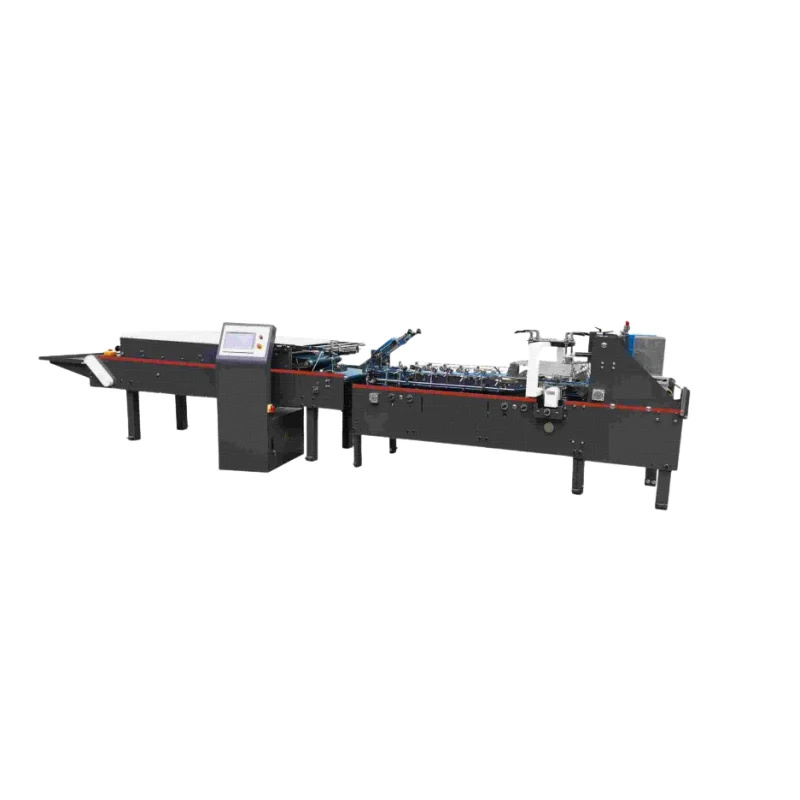
A folding box goes through several stages before taking its final form. After printing, the cardboard sheets are still flat and need to be converted into blanks with the correct shape, cutouts, and fold lines. This is where the die-cutter comes in first, followed by the folder-gluer.
The box making process can be summarized as follows:
Printed sheet → die-cutting and creasing → stripping, if needed → finished blank → folding → adhesive application → compression → finished folding box
The printed sheet enters the die-cutter
After the printing process, the sheet of cardboard may contain one or more blanks arranged according to the production layout. The flatbed die-cutter cuts along the outline of each blank and creates the crease lines that will later be used during folding. The following operations can be performed during die-cutting:
· the outline of each blank;
· the slots and windows;
· the fold lines;
· and other openings included in the box design.
If a single sheet contains multiple boxes, all the blanks are die-cut in a single pass. Then, the waste material remaining around or inside the designs can be removed manually or with automatic stripping, depending on the die-cutter’s configuration.
Waste removal after die-cutting
Once die cutting is done, the cardboard sheets may still have waste around the blanks or inside windows and other interior cuts. When a die cutting machines is equipped with automatic stripping, much of this material is removed within the die-cutter itself. If the machine does not include this feature, the waste material will need to be removed manually or with other stripping devices afterwards. After this stage, the blanks are ready to move on to folding and gluing.
From the flat blank to the folder-gluer
The folder-gluer receives the pre-die-cut and creased blanks. From this point on, the box begins to take its final shape. The blanks are piled in the feeding section, then the folder gluer move the blanks one by one to the folding, gluing, pressing sections. The configuration of the folder gluer depends on the box design to be produced, since a straight-line box does not follow exactly the same path as a crash-lock bottom box or a 4- or 6-corner box.
Pre-fold and Box Folding
As the blanks pass through the folder-gluer, the different parts of the blank are folded along the crease lines previously formed on the die-cutter. Some folder gluer configurations also include pre-fold function, which pre-folds certain creasing lines before the final folding. This can help the box open more easily later, especially when it will be used on an automatic packaging line.
Depending on the box structure, the folder-gluer can handle:
· straight-line or side-glued boxes;
· pre-folded boxes;
· crash-lock bottom boxes;
· 4-corner boxes;
· 6-corner boxes.
Adhesive Application
Cold glue is one of the most common adhesives in folding carton production. Depending on the box and the machine configuration, it can be applied using gluing discs or gluing systems with glue guns. The two common options are:
· Gluing discs are standard to most folder gluers, they apply a continuous line of adhesive as the blank passes through.
· Cold glue spraying systems use gluing guns and are commonly used for 4- and 6-corner boxes or other carton designs that require glue to be applied at specific points or in areas that are difficult to reach with gluing discs.
Some materials or box designs may require hot melt instead of cold glue. If your products require this type of adhesive, it’s a good idea to confirm this before purchasing the folder-gluer to ensure that the machine includes the appropriate gluing system.
Final Folding, Compression, and Output
Once the cold glue has been applied, the folder-gluer finishes folding the blank to form the box. Next, the areas with adhesive pass through the compression section, where they are held under pressure for a few seconds so that the glue can begin to bond the joints. At the end of the line, the box emerges folded and glued, ready to be collected, counted, packaged, or sent on to the next production step.
Relationship Between Die-Cutting and Folding
The blank that enters the folder-gluer must already be properly cut and scored. If the dimensions are incorrect or the fold lines are out of position, the box may fold incorrectly, become misaligned, or fail to close properly. Therefore, proper die-cutting greatly facilitates the folder-gluer’s work in the next stage.
For this reason, on a folding carton production line, it is not advisable to consider these two machines separately:
The die-cutter prepares the blank → the folder-gluer gives it its final shape and performs the gluing.
Printyoung Solutions for Folding Carton Production
At Shanghai Printyoung we offer flatbed die-cutters and folder-gluers for different types of boxes and production volumes. Our die-cutting machines cut and crease the blank, while our folder-gluers fold and glue the blanks according to the box’s structure. When a client has a project that involves both die cutting machines and folder gluers, we can help them check and analyze the whole box making process, starting from the printed sheet to the folded box, to then choose the most suitable machine models.