 EN
EN



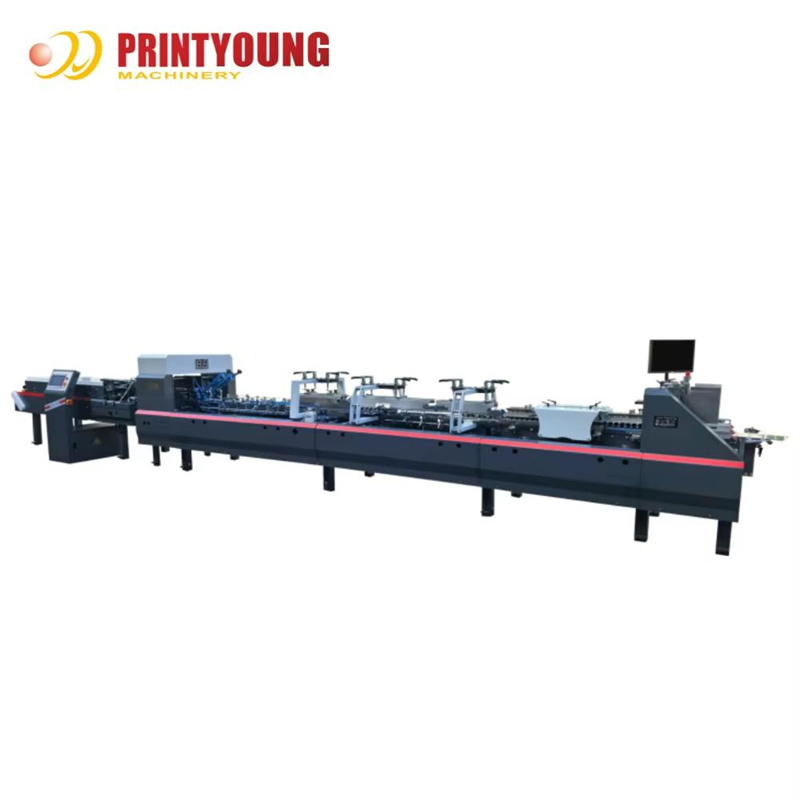
In the manufacture of folding boxes, an automatic flatbed die-cutter receives the printed sheets from the feeder, registers them in the correct position, and transports them to the die-cutting platen. In each cycle, the die can perform both cutting and scoring simultaneously, and then the processed sheets automatically continue to the outfeed section.
The cutting rules trim the outline of the box layout and create the windows, slits, or other cuts defined in the design. The creasing rules, meanwhile, form the fold lines without completely cutting the cardboard. These lines then allow the layout to be folded correctly in the box gluing machine.
How Cutting and Creasing Work in a Single Pass
The die cutting mold is prepared according to the design of the box to be produced. When the sheet enters the die-cutting section, the applied pressure causes the blades to cut the necessary areas and the creating rules to form the fold lines without cutting completely through the cardboard.
For a folding box, this means the sheet comes out of the die-cutter with its outer shape already cut and the main folds ready for the next stage. The blanks can then proceed to folding and gluing.
Some die cutting machines models may also have additional functions, such as:
· Automatic waste removal (also called stripping);
· Blanking;
· Embossing;
· Hot stamping.
Not all automatic die-cutting machines include the same functions. Some options are chosen depending on the product the customer needs to make. For example, if you want automatic waste removal after die-cutting, you might need a stripping section. If you work with boxes that have special finishes, you might require hot stamping or embossing. So, before choosing the configuration of the die cutting machine, you should check what products you will be manufacturing and what processes you need to perform.
Production and Level of Automation
In an automatic die-cutting machine, sheets are fed and conveyed through the machine continuously, without the operator having to place them one by one. The operators' job mainly consists of preparing the production run, making necessary adjustments, and monitoring operation. Automatic die cutters are suitable for high-volume or frequent orders. However, the maximum speed indicated in the technical specifications does not mean that all jobs will be produced at the same rate.
· The production rate can vary depending on:
· Sheet size;
· Type and thickness of the cardboard;
· Number of cuts and creases made by the die;
· Complexity of the layout;
· Time required to prepare each job.
Therefore, the same die-cutter can operate at different rates depending on the type of box, the material, and the die being used.
Precision in Printed Boxes
In pre-printed folding boxes, sheet positioning is especially important. The die must match the printed design so that the outline, windows, and fold lines are in the correct position.
The creasing process also requires proper setup. If the creasing rule, groove, or pressure are not appropriate for the thickness and type of cardboard, problems can arise during box folding, such as surface cracks, poorly defined lines, or irregular folds. For this reason, the quality of the result depends not only on the die-cutting machine. The die design, the cutting and creasing rules, the applied pressure, and the material features also are important details.
Materials that the die-cutting machine can handle
Not all automatic die-cutting machines have the same range of materials. Some models are designed primarily for solid board, while others can also work with corrugated board within certain thicknesses or flute types.
Before choosing a die cutting machine model, consider the following:
· Material type;
· Weight or thickness;
· Maximum sheet size;
· Maximum die-cutting area;
· Cutting pressure;
· Any additional functions required for the job.
For example, a client that mainly makes folding boxes from paperboard may have very different requirements from one that works with corrugated board or larger sheet layouts.
When is an automatic die-cutter suitable?
Automatic die-cutters are a better option when the factory works with high volumes, frequent orders, or needs to reduce manual handling of sheets. Manual or semi-automatic machines, on the other hand, may still be suitable for smaller production runs, less frequent jobs, or situations where the volume doesn't justify a larger investment in automation. Therefore, the decision shouldn't be based solely on choosing "manual, semi-automatic, or automatic." It's better to first compare the work that will actually be performed:
Sheet format → carton type → die design → production volume → necessary functions → level of automation
We offer flatbed die-cutting machines in various formats and automation levels for cardboard and packaging applications. To select a model, it's advisable to compare each machine's specifications with your typical production needs, rather than choosing solely based on the machine's name or maximum speed.