 EN
EN



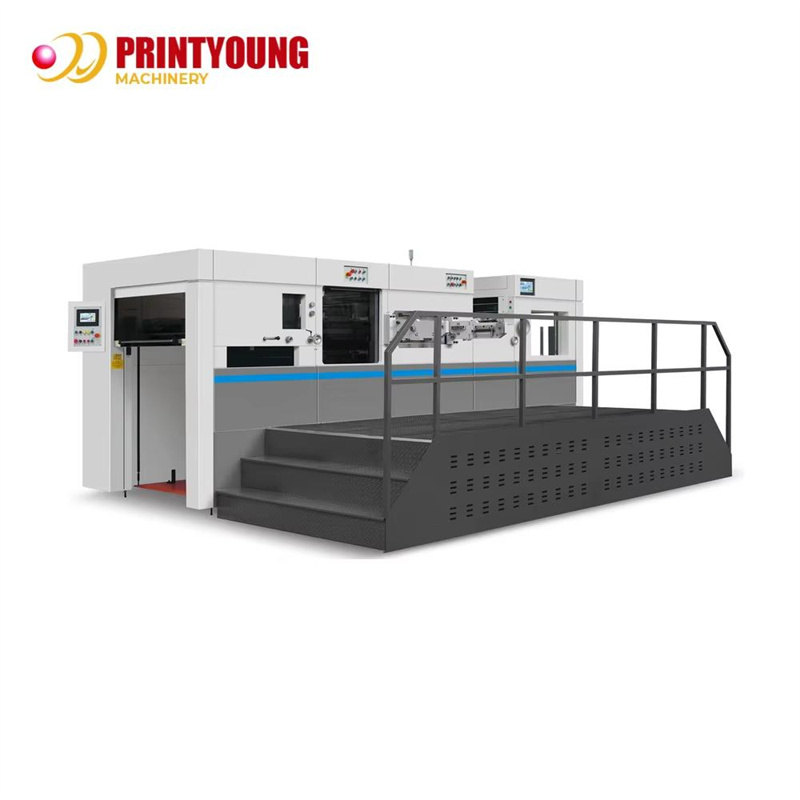
In folding cartons, cutting and creasing are usually done in the same pass. The die cuts the outline of the blank and the necessary openings, while creasing rules form the lines along which the carton will later be folded in the folder gluer. Which is why, when choosing a die-cutting machine, it’s not enough to just look at the size or speed. You also need to consider the sheets you typically work with, the type and thickness of the cardboard, the dies you use, and the factory’s production volume. With this information, it’s much easier to determine which model is best suited for your day-to-day work. Another important point is deciding how much of the process you want to automate and how much work the operator will continue to do.
Cutting, Creasing, and Die Cutting Mold Configuration
When die-cutting a folding box, the cutting and creasing can be performed in a single pass. To do this, the die is set up with the necessary elements based on the box design and the material to be processed:
· Cutting rules: cuts the outline of the blank, the slots, windows, and other necessary openings.
· Creasing rules: form the fold lines without completely cutting through the cardboard.
During die-cutting, adjustments must be made according to the material and design of the box. Pressure, cutting rules, and creasing rules may vary depending on the type of cardboard, its thickness, and the die layout, so, before preparing each job, it's advisable to check:
Material and thickness → die design → cutting & creasing rules → pressure → cutting and creasing results
1. Level of Automation and Operator Involvement
The difference between a manual, semi-automatic, and automatic die-cutting machine lies primarily in the extent to which the operator is involved in handling the sheets.
· Manual die-cutting machines: The operator loads each sheet into the machine and removes it after die-cutting.
· Semi-automatic die-cutting machines: Feeding the sheets still requires operator intervention, but the die-cutting is performed automatically.
· Automatic die-cutting machines: feeding, positioning, die-cutting, and sheet ejection are all performed automatically. The operator focuses primarily on setting up the job, making adjustments, and supervising production.
2. Box Type and Die Complexity
In addition to the level of automation, it’s also important to consider the tasks the die-cutting machine will need to perform on a daily basis. Making boxes with a simple designs is not the same as working with layouts that include multiple windows, slots, crease lines, or many blanks on a single sheet. So, before choosing a die cutting machine, check carefully:
· Number of blanks per sheet: the more complex the layout, the greater the total number of cuts and creases the die will make.
· Windows, slots, and interior cuts: these create more waste areas and may make an automatic stripping section more useful.
· Number of crease lines: boxes that have more fold lines usually need more attention during die setup to make sure the creases are formed correctly.
· Registration with the print: on pre-printed boxes, the cutting and creasing must align correctly with the printed graphics.
· Job changes: If the plant changes die cutting molds and formats several times a day, it is also important to consider the time required to set up each new order.
3. Material, Pressure, and Die Configuration
The material directly influences how the die-cutting process is set up. Paperboard and corrugated cardboard do not behave the same way, and therefore may require different cutting rules, creasing rules, creasing channels, and pressure settings. Before choosing a die-cutting machine, it is important to be clear on the following details:
· Type of cardboard (paperboard, corrugated, or another compatible material.)
· Weight or thickness of the material
· Flute type (if working with corrugated cardboard.)
· Design of the die cutting mold design (number and distribution of cuts, creases, windows, and other details.)
· Pressure of die cutting
4. Production Speed and Daily Capacity
The maximum speed of a die-cutter indicates how many sheets it can process per hour, but it doesn't reflect everything that happens during a workday. When changing to a different box or sheet size, the die typically needs to be changed, the pressure adjusted, the feeder re-prepared, and the cut and crease checked to ensure they align with the print. This setup time also impacts the total daily production capacity. So, when comparing models, it’s important to consider:
· Maximum speed: This helps compare the working capacity of different die-cutting machines.
· Duration of each job: Long runs allow for longer continuous operation without stopping the machine, while short jobs require more frequent job changes.
· Setup time: Each die change and each new adjustment takes up part of the workday.
· Automatic stripping: If die-cutting leaves a significant amount of waste material around the blanks or inside windows and openings, this section can automatically remove it and reduce the amount of manual labor required after die-cutting.
Not all factories benefit from speed in the same way. If most of the production consists of long runs, high speed can have a greater impact. But if dies and formats are changed several times a day, setup time also affects daily capacity. Therefore, it’s best to choose a die-cutting machine based on production volume and how often jobs change, not just on maximum speed.
5. Automatic Stripping
After die-cutting, some waste material may remain attached to the sheet, for example, around the blanks or inside windows and other cut-out areas. If removed by hand, the process can be quite time-consuming, especially for long runs or designs with many waste areas.
A die-cutting machine with automatic stripping removes much of this material before the sheet exits the machine. This reduces manual labor after die-cutting, and the blanks can move more quickly to the next stage. Stripping can be useful when:
· large orders are being processed;
· the design generates many areas of waste;
· there are windows or interior cuts;
· or you want to reduce manual labor between die-cutting and the next stage.
Stripping removes the waste. Blanking, when available, serves another purpose: separating the individual blanks from the sheet after die-cutting and stripping.
6. Operating Costs and Support
The purchase price is only part of the total cost of a die-cutting machine. During operation, other expenses also come into play that should be taken into account from the start:
· electricity consumption;
· dies and tools;
· maintenance;
· replacement parts;
· number of operators;
· installation;
· training;
· and technical support.
Printyoung Die-Cutting Machines for Folding Carton Production
We offer manual, semi-automatic, and automatic models for different production levels and types of cardboard jobs. Some configurations can also incorporate automatic stripping or other functions depending on the application. If you are not sure which model is suitable for the product you want to make, do not hesitate to contact us, we're ready to help you find the most suitable die cutting machine for your applications.
As one of our missions is to provide hight quality machinery, we conduct pre-shipment testing and can provide guidance on installation, operator training, spare parts, and technical support based on the project’s needs. Backed by over 20 years of experience in printing and packaging machinery, we have supplied equipment to customers in more than 60 countries.